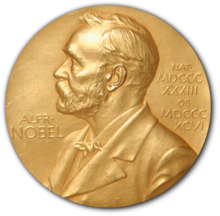
 Once again we are dealing with the annual ritual from the Nobel Prize bulletins. The first morning telephone calls, the expressions of shock, the gnashing of teeth within the betting pools. At the time from the hoopla, I acquired an annoyed email on Tuesday from�an acquaintance of mine, an immunology grad student named Kevin Bonham. Bonham thought there is a problem with this particular year s Prize for Medicine or Physiology. It will have attended another person.
Kevin displays the storyline inside a new publish on his blog, We Beasties. �The prize, he creates, was handed to some researcher that lots of feel is undeserving from the recognition, yet still time sullying the legacy of my scientific great-grandfather. Browse the relaxation from the publish to determine why he feels by doing this.
Kevin e-mailed me as they was writing in the blog publish. He wondered basically would want to consider covering this debate myself, allow it more prominence. I passed. Even when I weren t attempting to carry several due dates on my small mind at the same time, I'd still pass. When I described to Kevin, I am inclined to stay away of Nobel controversies, because I believe the prize is, by definition, a lousy method to recognize important science. All of the rules about needing to enhance their lives to win it, about how exactly there might be a maximum of three those who win together with the possible lack of awards for huge swaths of important scientific disciplines make most of these disputes both inevitable and tiresome.
The folks behind the Nobel Prize, I ought to explain, did lots of good. Their site is really a fine repository of knowledge concerning the good reputation for science. I ve drawn on it many occasions while focusing on books and articles. There s another thing pleasing to determine the planet attracted, a couple of days a minimum of, towards the underappreciated byways of science. When the Nobel Prize makes more and more people conscious of quasicrystals, the Prize does something unquestionably wonderful.
However the vehicle that provides this good is essentially absurd. The Nobel Prize rules say a maximum of three people can win an award, for instance. This season s prize for physics visited Saul Perlmutter, John Schmidt, and Adam Riess for his or her focus on the dark energy that's speeding up the speeding up growth of the world. Half visited Perlmutter, along with a quarter visited Riess and Schmidt. But, obviously, researchers fail to work in troikas. It wouldn t even seem sensible to express that three people could accept the prize with respect to three labs. Science is really a stupendously complex social undertaking, by which researchers typically end up part of shifting systems during the period of a long time. And individuals systems are not only comprised of happy buddies working together on projects together. Rivals racing for the similar goal can really speed the pace towards discovery.
Now, some individual researchers are extremely amazing people. However the Nobel Prize doesn t basically recognize them to be amazing people. The citations link each individual to some discovery, as though there is some kind of equivalence between your two. But breakthroughs are generally a lot larger than one individual, as well as three.
In the wonderful book SomePercent Percent World, Richard Panek describes a brief history from the research that brought for this year s physics prize. I just read it to examine it for that Washington Publish, and that i was particularly taken with a story in the finish. In 2007, the Gruber Prize, the greatest prize for cosmology research, was granted for that research. Schmidt haggled using the prize committee until they decided to widen the prize to any or all 51 researchers who was simply active in the two rival teams. Thirty-five of these traveled to Cambridge for that ceremony. It could have been fun to look at Schmidt go facing the Nobel Prize committee. He'd have forfeit, obviously, but a minimum of he'd make an essential point.
Should researchers get credit for nice work Obviously. But that's what history is perfect for. Charles Darwin and Leonardo da Vinci never got the Nobel Prize, but in some way we still have the ability to remember them as vital figures anyway. Time that's spend quarrelling over whether someone should get 50 percent of the prize or twenty-5 % or 0 % might be allocated to far better things, like more science.
[Update: Modified publish to clarify the prize was for research around the acceleration from the world, not the dark energy many think is driving the acceleration.]

No comments:
Post a Comment